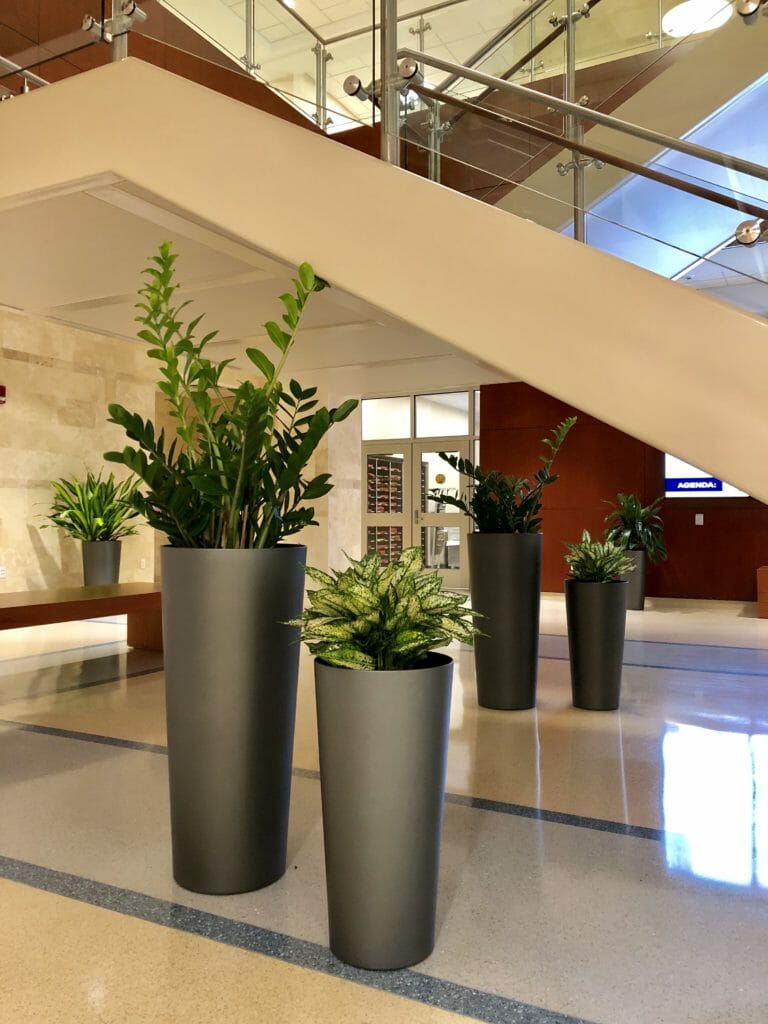
Design That Breathes: The Art of Layering Plants into Modern Interiors
By Raimondi Horticultural Group, Inc
Natural elements are now central to interior design strategy, bringing warmth, calm, and a sense of balance to modern spaces. But creating harmony with plants isn’t as simple as adding a few containers to a lobby. It’s about composition, texture, scale, and flow — in other words, layering.
At Raimondi Horticultural Group, we approach plant design like an art form. We blend horticultural science with interior aesthetics to craft interiors that breathe — spaces that inspire creativity, comfort, and connection.
More importantly, layered plant design supports the principles of biophilic design by recreating the richness, diversity, and structure found in nature. Thoughtfully designed interior landscapes help people feel more connected to living systems, creating environments that support well-being, productivity, and a more positive experience of the built environment.
Why Layering Matters in Interior Plant Design
Layering is a principle borrowed directly from nature. In forests and natural ecosystems, plants grow in structured layers — from canopy to understory to groundcover — each contributing depth, rhythm, biodiversity, and life.
When applied indoors, that same approach creates depth, movement, and balance, transforming static interiors into living, dynamic environments. Rather than simply decorating a space, layered plant design creates an immersive experience that mirrors the complexity and comfort of natural environments.
The benefits of layered plant design include:
Visual depth: Makes spaces feel larger and more dimensional
Balance and proportion: Enhances flow and design harmony
Biophilic connection: Evokes natural environments that help reduce stress and support emotional well-being
Focal structure: Directs attention to architectural features or brand elements
Sensory engagement: Introduces texture, movement, and natural variation that enrich the occupant experience
Research in biophilic design suggests that people respond positively to environments that reflect the patterns and structures found in nature. Layered plant installations help bring those experiences indoors in a meaningful and intentional way.
The Anatomy of Layered Design
Creating a layered plant design isn’t about filling every corner — it’s about building a thoughtful composition that guides the eye and engages the senses. Here’s how our design team approaches it:
1. The Canopy Layer
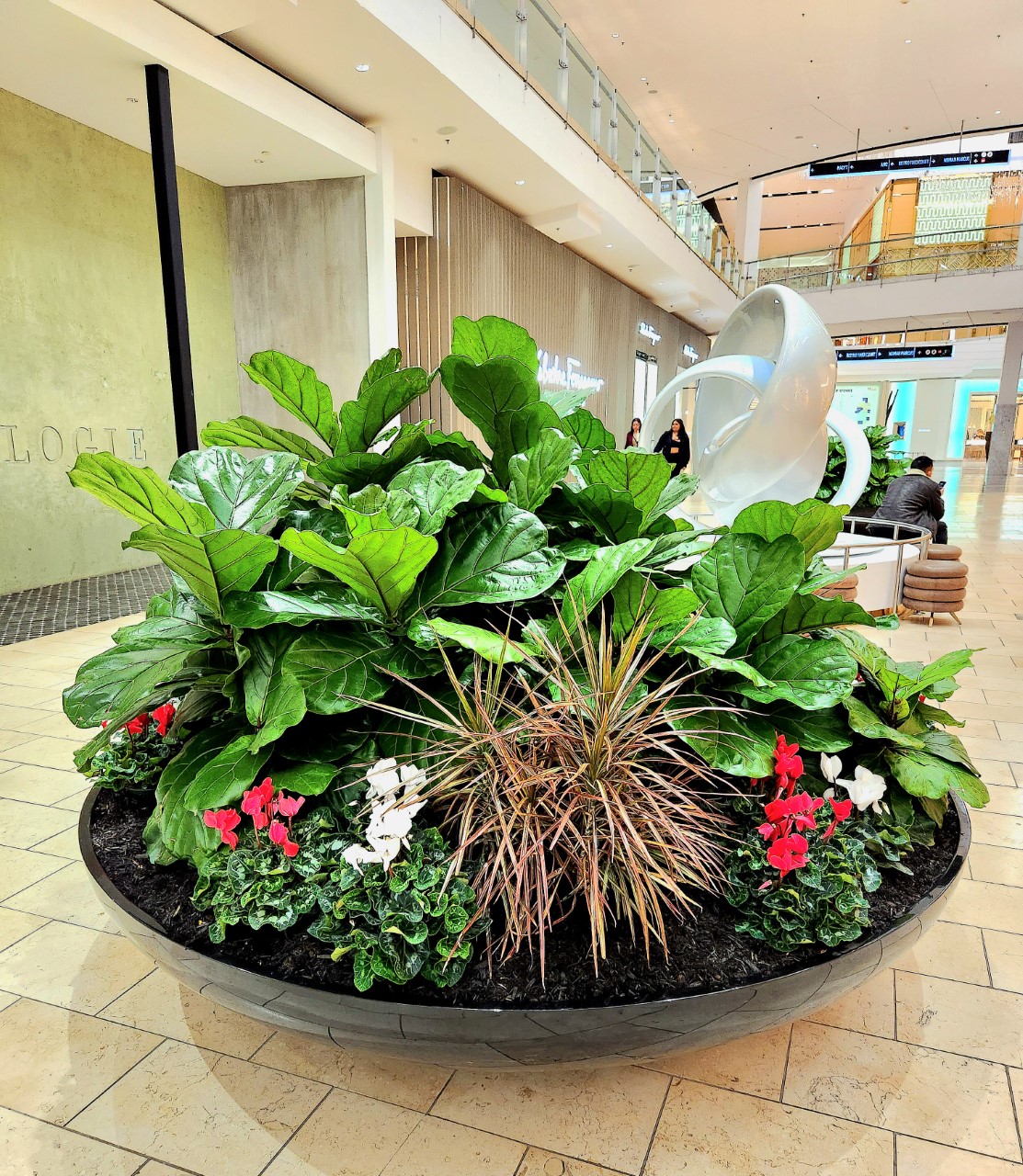
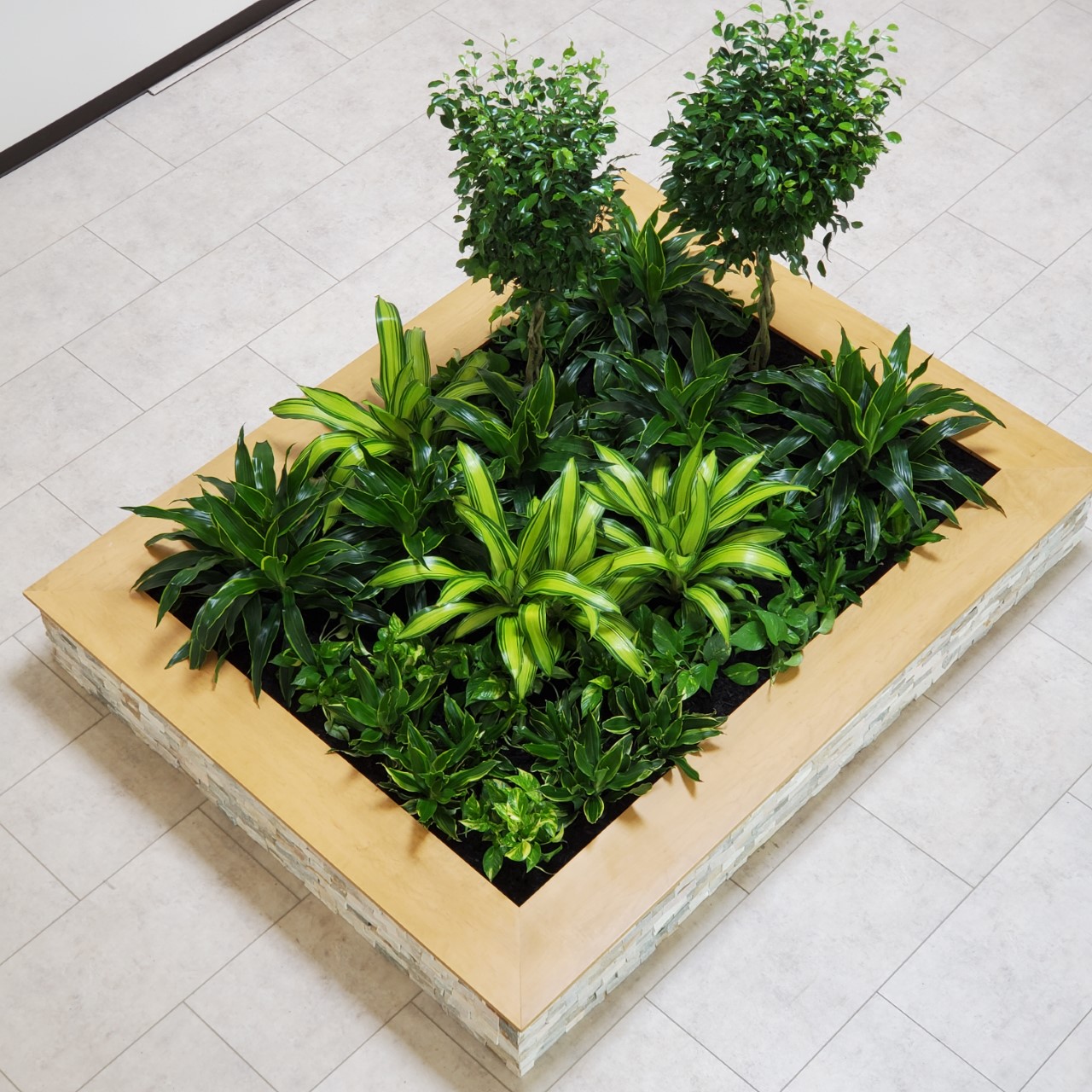
Tall, statement plants set the tone. Ficus lyrata (Fiddle Leaf Fig), Dracaena, or Kentia palms create vertical movement and structure. In open atriums or corners, they establish scale and define the spatial rhythm of a room.
From a biophilic perspective, canopy plants help recreate the feeling of being surrounded by nature. Their height and presence introduce a sense of refuge and enclosure while softening large architectural spaces.
2. The Midstory Layer
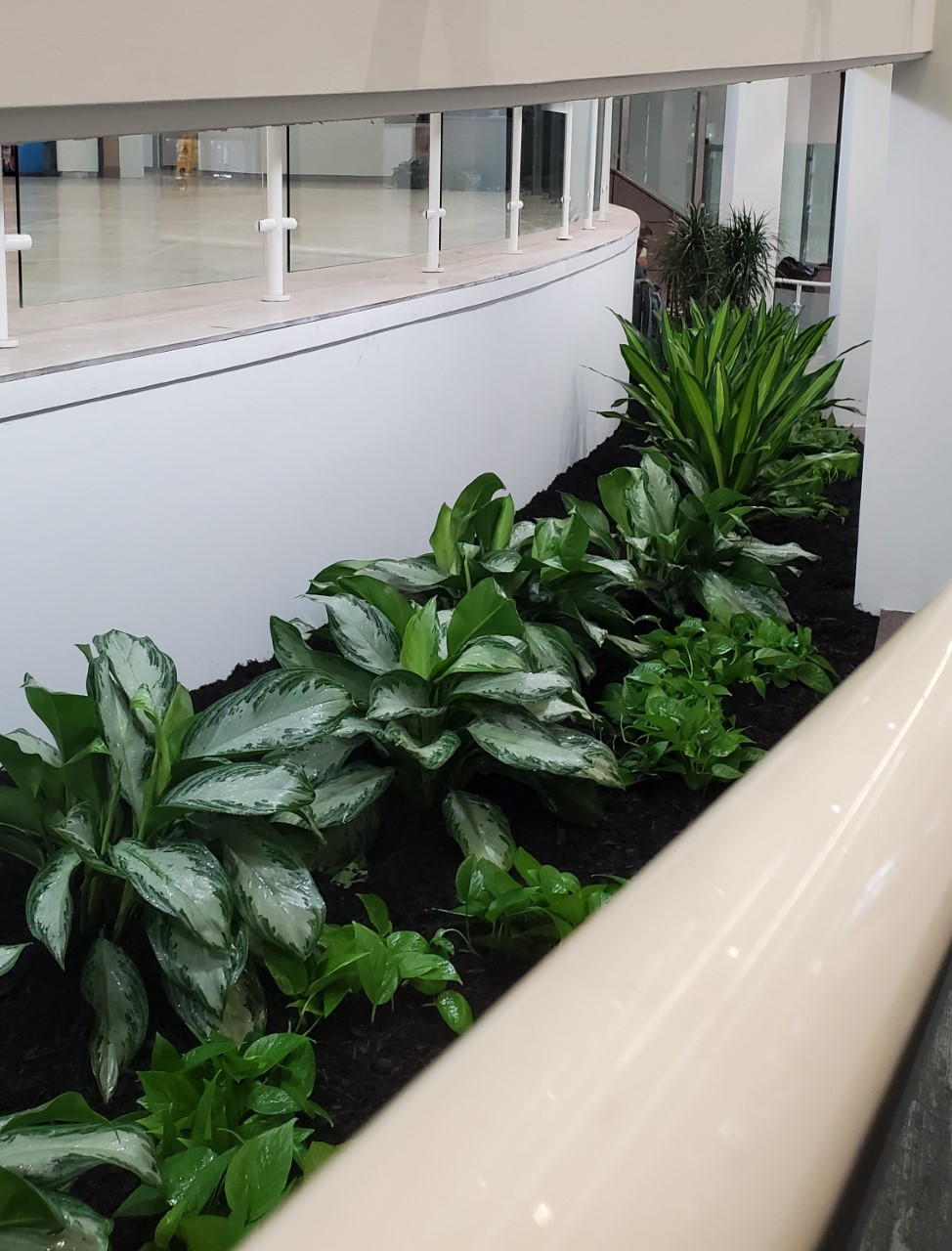
This layer brings cohesion and texture. Medium-height plants like Schefflera, Aglaonema, or Philodendron varieties connect upper and lower levels, softening transitions and filling visual gaps.
The midstory layer creates visual complexity that feels natural rather than manufactured. This diversity helps prevent interiors from feeling sterile while contributing to a richer and more engaging environment.
3. The Ground Layer
Low plants — such as ferns, Pothos, or Sansevieria — ground the design. They add density and rhythm, perfect for grouping under taller plants or along pathways and wall bases.
Ground-level greenery helps create continuity throughout a space, encouraging visual exploration and reinforcing the feeling of being immersed in a living environment.
4. Trailing and Vertical Accents
Hanging or climbing plants, like English ivy, pothos, or green walls, introduce vertical softness. These living elements draw the eye upward, reinforcing biophilic depth without overwhelming the space.
Vertical greenery also introduces movement and organic form, helping soften hard architectural lines and creating stronger visual connections to nature throughout the interior.
Designing for Modern Interiors
Layered plant design complements modern architecture beautifully — it balances clean lines, hard materials, and neutral tones with natural movement and organic texture.
Many contemporary interiors feature glass, metal, stone, and other hard surfaces. While visually striking, these materials can sometimes feel cold or impersonal. Layered plant installations help restore balance by introducing living elements that bring warmth, softness, and natural variation to the environment.
Our designers collaborate with architects and facility managers to ensure plants enhance both aesthetics and function. We consider:
Light conditions — natural vs. artificial exposure
Space proportions — ensuring scale matches the room
Traffic flow — maintaining accessibility and openness
Brand expression — reflecting company personality through species and containers
Occupant experience — creating environments that feel comfortable, welcoming, and connected to nature
The result is a cohesive design that feels curated, intentional, and alive.
Texture, Tone, and Container Selection
Containers play a crucial role in layered design. The right vessel reinforces the aesthetic tone of the space — modern fiberglass for minimalism, textured ceramics for warmth, or sleek metallics for a contemporary edge.
We also layer texture and tone by mixing:
Glossy leaves with matte foliage
Upright species with cascading forms
Bold planters with subtle organic surfaces
Fine textures with broad-leaf varieties
These combinations create harmony and sophistication while reflecting the diversity found in natural environments. The interplay of texture, form, and material creates sensory experiences that make interior spaces feel more engaging and dynamic.
Layering Isn’t Just Design — It’s Well-Being
One of the central goals of biophilic design is to strengthen the relationship between people and nature within the built environment. Layered plant design helps accomplish this by creating interiors that feel less artificial and more connected to living systems.
Research continues to demonstrate that exposure to greenery can support focus, reduce stress, improve mood, and enhance overall satisfaction within interior spaces. Layered plant installations amplify these benefits by surrounding occupants with greenery that feels immersive, balanced, and natural.
When plants are thoughtfully integrated into an environment, they become more than decorative features. They become part of the experience of the space itself.
It’s not just design — it’s wellness, sustainability, and human connection expressed through living landscapes.
Let’s Bring Your Interiors to Life
Whether you manage an office, hotel, healthcare facility, corporate campus, or mixed-use property, your interior deserves more than decoration — it deserves design that breathes.
Let Raimondi Horticultural Group create a layered plant installation that reflects your brand, complements your architecture, and strengthens the connection between people and nature.
Transform Your Interior Into a Living Experience
📞 Call (201) 445-1299 to schedule an interior plant design consultation today.
Returning to the office after a weekend of outdoor activities surrounded by trees and green space can be a bummer. Particularly if the office is comprised of drab divider walls and stark interior colors. Such a reality can have a short- and long-term negative impact on office employees or hotel guests as people are naturally […]
A little bit of green can go a long way, and we’re not talking about money. Plants in the workplace have been proven to improve employee productivity and reduce stress. […]
Similar to systems and structures seen in nature, humanity’s networks of lights, roads, and cities convey energy, materials, and information. Intentionally mimicking these natural systems offers a path to a prosperous future for our society. […]